Planning Before Digging
Property shape, fence height, access points, and low drainage areas should all be considered before posts are set.
Local Fence Contractor
This page is focused on the installation side of the project, including layout planning, material selection, post placement, gate design, hardware, drainage, and the local conditions that affect fence performance in Pensacola.
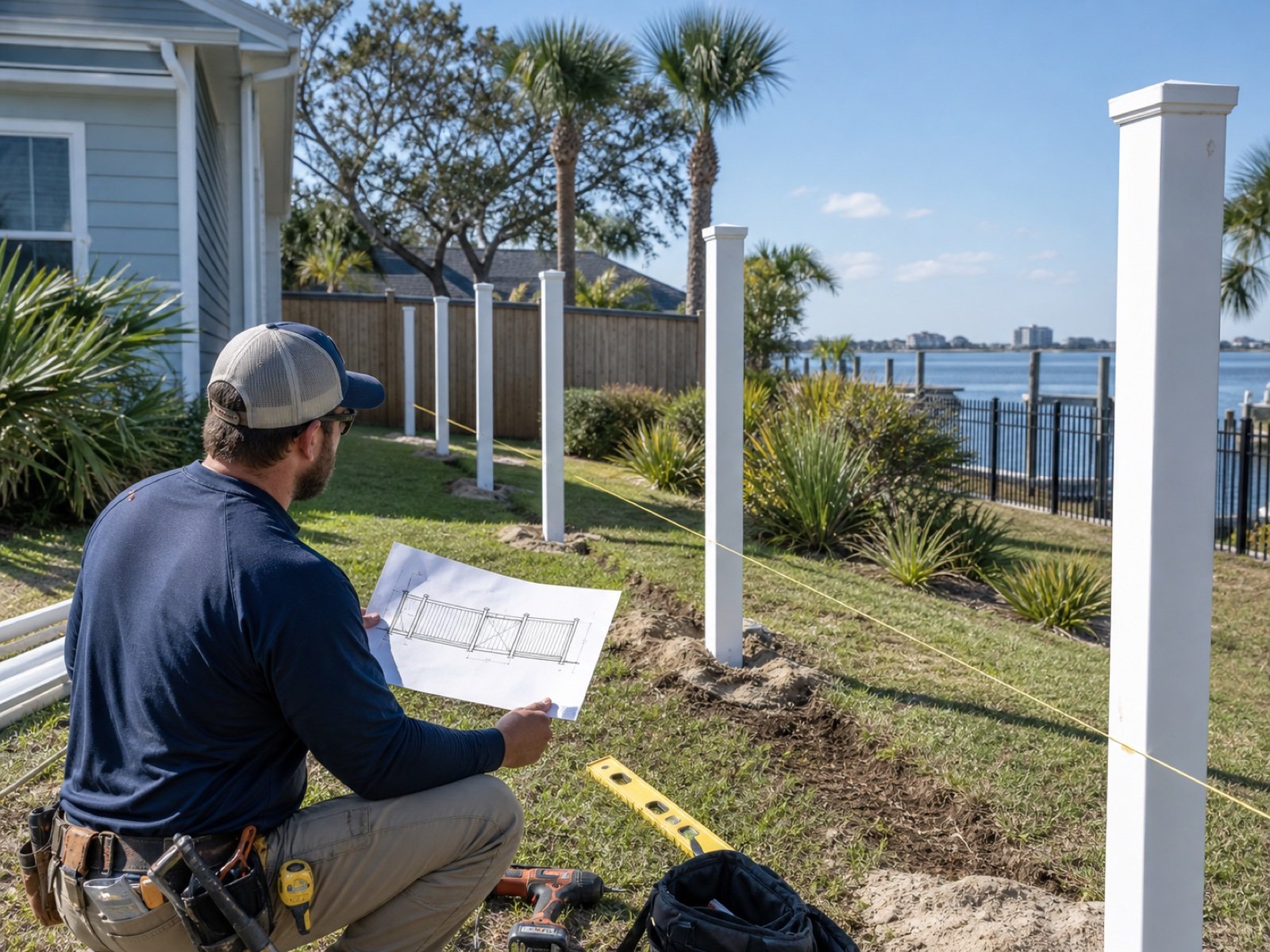
Installation Focus
A local fence contractor in Pensacola should help define the fence line, explain the tradeoffs between materials, plan gates for how the yard actually works, and account for coastal weather conditions that can affect alignment, durability, and maintenance over time.
Property shape, fence height, access points, and low drainage areas should all be considered before posts are set.
Privacy, maintenance, visibility, and HOA expectations all influence whether wood, vinyl, aluminum, or chain link makes more sense.
Gate location, latch type, swing direction, and coated fasteners matter for daily use and long-term performance.
Benefits
Contractor planning starts with what the property needs the fence to do and how the line should move across the lot.
Stable posts and well-planned gate openings are central to a fence that feels solid and works smoothly over time.
Installation goals vary between backyards, pool areas, rentals, and business-use properties, so scope matters.
Each use case changes how height, material, visibility, latches, and gate placement should be handled.
Fence installation contractor Pensacola projects should be planned around humidity, drainage, wind, salt air, and sandy soil.
Gulf Coast Conditions
Fence installation in Pensacola is not only about panel style. It also involves post depth in sandy soil, drainage near low spots, fasteners that can handle coastal moisture, gates that stay aligned, and material choices that fit humidity, salt air, and storm-season exposure.
Stable posts help the fence line resist movement and support heavier gates or taller privacy sections.
Standing water and runoff can affect wood longevity, gate swing, and the bottom reveal across the property.
Coated hardware and material-specific fasteners matter more when properties are exposed to coastal air.
Gate size, latch hardware, hinge quality, and use frequency all influence how the contractor should frame the opening.
Wood, vinyl, aluminum, and chain link each respond differently to wind, humidity, salt exposure, and maintenance cycles.
Process
Review the proposed fence line, property use, access points, and where gates should make daily movement easier.
Choose the right fence type, gate construction, and coated hardware for the property’s goals and exposure.
Account for soil, drainage, transitions, and the level of support needed for corners, gates, and heavier sections.
Complete the fence line, test gates, review latch function, and confirm the finished layout fits the property as planned.
Fence Contractor FAQ
Ask about layout planning, materials, gate details, post depth, hardware, drainage, and what site factors could change the project scope.
Yes. Material selection should reflect privacy needs, visibility, maintenance goals, pets, pools, and neighborhood expectations.
That depends on fence length, gate count, material type, weather, site access, and whether the property has grade or drainage complications.
Fence material, height, footage, gates, terrain, access, and hardware all contribute to the overall project scope.
Yes. Gate planning is part of the installation process and should match how the property is used every day.
The best choice depends on whether the property prioritizes privacy, low maintenance, coastal durability, visibility, or a more economical enclosure.
Free Estimate
Request a free estimate if you want help planning the fence line, comparing materials, and building around real Gulf Coast site conditions.